Unseen Chat & Track: Sneakly
- 4.6
- Rating
- 500.00K
- Installs
- Free
- Price

 Analysis by App-foxy
I approached Unseen Chat & Track: Sneakly as a small communication utility rather than another messaging service. Its purpose is straightforward: help me check unseen messages with more confidence while keeping the act of reading separate from the pressure to answer immediately. That sounds modest, but it addresses a familiar problem. A message can arrive at the worst possible moment, and opening it can create an expectation of instant attention.
After spending time with it, my opinion is that the app’s appeal is strongest during the first week, when its privacy-minded approach feels like a welcome change from the usual rhythm of chat apps. The more important question is whether it remains useful once the novelty disappears. For me, that depends on whether I am dealing with frequent incoming messages and genuinely need a calmer way to review them. If my conversations are light, the extra layer may not earn a permanent place on my phone.
What the first week feels like
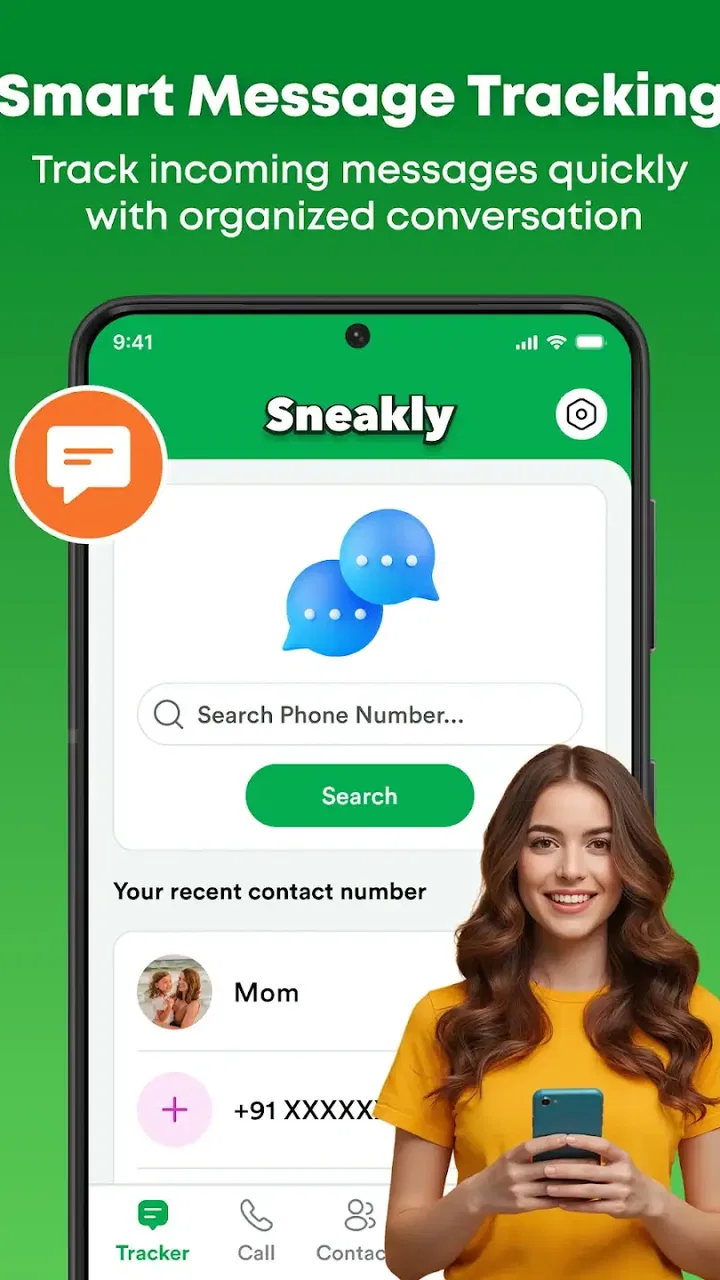
The basic idea is easy to understand. Instead of treating every incoming message as an immediate invitation to enter a conversation, Unseen Chat & Track: Sneakly gives me a way to stay informed without making every message feel like a commitment. That distinction is the app’s main strength, and it is more practical than the short store label, “Unseen Chat,” might suggest.
You May Also Like

 Blood Strike: 2.5 Anniversary
Blood Strike’s Loadouts Turn Every Drop Into a Tactical Gamble
A close look at Blood Strike’s custom loadouts: how fast access to signature weapons reshapes its battle royale rhythm, rewards preparation, and narrows the gap between fights.

 Pandora - Music & Podcasts
Pandora’s Music Is Easy to Start, but Harder to Recover
Pandora’s strength is its low-effort path from a seed to a station. Its weak spot is how much confidence it asks you to place in connection, setup, and quiet recovery.

 8 Ball Pool
 Is Built on Rivalries, Rematches, and Routine
A close look at the rivalries, rematches, shared routines, and unanswered safety questions that turn a quick pool match into a persistent mobile community.

 Samsung Music
’s Quiet Strength Is Playing What You Already Own
Its reach comes less from spectacle than from dependable access to a personal library. That simplicity is both the app’s strongest retention engine and its ceiling.

 AccuWeather: Weather Radar
AccuWeather Review: A Quick, Clear Forecast for Everyday Decisions
For everyday plans, the best forecast is the one you can understand quickly. AccuWeather makes rain timing, radar, and local conditions easy to act on, with a few trade-offs.

 Hill Climb Racing
Why Hill Climb Racing Still Turns Crashes Into One More Run
A tiny car, a bumpy hill and one more upgrade: Hill Climb Racing keeps resurfacing because its simple chaos makes every near-miss feel personal.
More From Our News Desk



In the first few days, I found the appeal especially clear during busy periods. If I was working, commuting, studying, or simply trying to keep an evening quiet, I could approach new messages on my own terms. The benefit was not that I became less social. It was that I could decide when I was ready to respond instead of letting the arrival of a message dictate my next action.
This makes the app particularly interesting for people who receive messages from several conversations at once. It can also suit anyone who dislikes the awkwardness of opening a message accidentally and then feeling obliged to reply before having enough time or energy. The app’s focus on privacy is useful here because it supports a more deliberate reading habit.
I would not describe it as a replacement for the chat apps where conversations actually happen. It sits beside them as a communication aid. That difference matters. Someone looking for group chats, voice calls, a contact list, or a new social network will not find the right kind of product here. The value comes from controlling the moment of attention, not from adding another place to talk.
The developer is Techvio, and the app belongs to the communication category. It is free, carries an Everyone age rating, and supports devices running Android 8.0 or later. Those details make it relatively easy to try, particularly for people using an older Android phone who do not want to replace a device simply to test a focused utility.
A realistic everyday use case
Imagine receiving several messages while preparing for a meeting. One may be urgent, another may be casual, and a third may require a thoughtful answer. In a normal routine, checking one notification can lead to opening the entire conversation, seeing that the message has been read, and feeling pushed toward a rushed response. A privacy-focused reader changes that sequence. I can first understand what has arrived, sort out what matters, and return later when I can answer properly.
That workflow is more valuable than it may sound. It separates message awareness from response timing. I still need to use the original messaging service when I want to reply, but I am less likely to confuse reading with responding. For people who regularly postpone replies because they do not have the right words yet, that small separation can reduce unnecessary stress.
There is also a useful social boundary here. Not every delayed reply means a person is ignoring someone. Sometimes it means they are protecting a period of concentration or waiting until they can give the conversation proper attention. Unseen Chat & Track: Sneakly fits that situation better than the usual notification preview, because its purpose is built around discretion rather than speed.
Where it differs from ordinary alternatives
The usual alternative is simply to rely on notification previews, notification history, or the privacy settings already available inside a messaging app. Those options can be enough for occasional checks, and they may be preferable if I want the fewest installed tools. However, they often make me choose between seeing too little and opening the conversation directly.
Another alternative is to disable read indicators or mute notifications. That can reduce pressure, but it does not necessarily create a comfortable way to review incoming messages. Muting may hide useful information along with the distractions, while changing a read-receipt setting affects the conversation more broadly. The focused approach here is more appealing when I want awareness without turning every exchange into an immediate interaction.
The trade-off is that a dedicated utility adds another step. If I already have a routine that works with notification controls, this app may feel unnecessary. Its advantage is not universal convenience; it is a more intentional workflow for people who repeatedly struggle with unread-message pressure.
Whether the value survives beyond the novelty
The first-week experience is easy to appreciate because the problem is familiar. The longer-term test is different: does the app solve a recurring annoyance, or does it merely feel clever for a few days? In my view, it earns lasting value when it becomes part of a predictable message-review routine.
For example, I could check messages at the start of a break, before leaving work, or after finishing a focused task. The important habit is not checking constantly. It is using the app at deliberate times so that it helps organize attention rather than creating another stream of interruptions. That is the kind of recurring use that can justify keeping a communication utility installed.
A second useful habit is separating low-pressure reading from high-priority replies. If I see that something needs an immediate answer, I can switch to the relevant chat service. If it can wait, I can leave it for a better moment. This makes the app more than a novelty because it supports a repeatable decision process: identify, prioritize, and respond when appropriate.
There is a subtle advantage for people who manage several roles during the day. A parent, student, freelancer, or shift worker may need to remain aware of messages without being continuously available. The app can support that boundary, although it should not be treated as a substitute for an agreed emergency contact method. If someone must reach me urgently, I would still rely on a direct call or a clearly established channel rather than assuming an unseen-message tool will handle every situation.
The current version is 1.1, which suggests a relatively early stage for the product. I would approach it as a focused tool that may become more useful as it fits into my routine, not as a mature all-purpose communication platform. That distinction helps set realistic expectations. Its recurring value comes from the problem it addresses, not from having a large collection of unrelated functions.
Who is most likely to keep using it?
I can see a strong fit for people who feel anxious about read indicators, people who need to protect blocks of concentration, and users who receive enough messages that ordinary previews become inconvenient. It may also help anyone who wants to review conversations privately before deciding whether to engage.
The app is less convincing for someone who answers every message immediately, rarely receives chat notifications, or already feels overwhelmed by too many utilities. It is also not the right choice for a person wanting a complete messaging ecosystem. In those cases, the original communication apps and their built-in controls are simpler and probably better.
Families should also think about the Everyone rating in practical terms. It makes the app broadly accessible, but younger users may still need guidance about privacy, boundaries, and when a message requires a prompt response. A tool that makes reading feel more private should be paired with sensible communication habits, especially when safety or urgent matters are involved.
The maintenance burden is small, but not zero
Any utility that sits between me and my messages creates some maintenance. I need to remember that it is an additional part of my communication routine, not a magical layer that removes the need to manage conversations. If I stop checking it at useful times, it can quickly become less relevant than the original notifications.
The main maintenance task is behavioral rather than technical: deciding when to use it and when to go directly into a chat. I would avoid checking repeatedly throughout the day because that defeats the purpose of reducing interruption. A scheduled or situational check works better than treating the app as another inbox that demands constant attention.
There is also a practical need to keep expectations clear. Reading privately does not mean a conversation has been handled. I still have to remember important replies, follow up on time-sensitive requests, and switch to the original app when I want to answer. The app can make the first step calmer, but it cannot replace the second step.
That is one of the most important trade-offs. Unseen Chat & Track: Sneakly may reduce the pressure attached to opening a message, but it can also make postponement feel easier. Used deliberately, that is helpful. Used as a way to avoid every difficult conversation, it could simply move the problem further down the day.
Small workflow changes that improve the experience
My first tip is to use it for triage, not endless browsing. I would look for the messages that affect my next decision, then close the loop by replying, saving the task mentally, or returning at a defined time. This prevents private reading from turning into a second form of passive scrolling.
My second tip is to reserve it for situations where privacy and timing actually matter. If I am relaxed and ready to chat, opening the original app is usually more direct. The dedicated tool earns its place when I am busy, emotionally tired, or trying to protect a period of focus.
My third tip is to create a clear rule for urgent matters. I would not rely on an unseen-message workflow for emergencies, deadlines, or situations where another person reasonably expects immediate confirmation. In those cases, direct calls and established urgent channels remain safer and clearer.
A fourth insight is that the app works best when paired with a response routine. After reviewing messages, I might choose one short window for replies rather than answering each conversation separately as it appears. That turns the app into part of an attention-management system instead of an isolated privacy trick.
Where fatigue can appear
The first source of fatigue is repetition. If I already know how to use notification previews and rarely feel pressured by read status, the app may not add enough to justify another daily step. Its central idea is useful, but it is also narrow. Narrow tools need to solve a frequent problem to remain valuable.
The second is the possibility of fragmented attention. A private review layer can feel calmer at first, yet I may still end up checking messages more often because the barrier to looking is lower. The app does not automatically create discipline. I have to decide whether a check is useful before opening it.
The third is the difference between privacy and certainty. A discreet reading experience can help me feel more in control, but it should not encourage assumptions about what another person knows, expects, or can see. Communication habits vary, and the safest approach is to treat privacy tools as support for boundaries rather than as a guarantee that every social consequence disappears.
There is also a fit issue with the wider phone experience. People who prefer a minimal Android setup may see the app as one more service to maintain. People who enjoy dedicated tools for specific tasks may appreciate that focus. Neither preference is wrong; the decision depends on whether unread-message pressure is a recurring inconvenience or an occasional annoyance.
How the numbers fit the experience
The app has an average rating of 4.6 from around 2.4 thousand ratings, with over 500 thousand installs. Those figures indicate that the idea has attracted meaningful interest and that many users find the basic concept worthwhile. I would still interpret them carefully. A strong rating can show that the central problem is real, but it does not automatically mean the app will suit every messaging setup or personal routine.
For me, the more useful question is whether the app changes a repeated behavior. If I regularly delay opening messages because I am worried about appearing available, then this utility has a clear job. If I simply want a faster way to answer everyone, it is probably the wrong direction. The rating supports trying it; the use case determines whether it stays.
My long-term verdict
I like Unseen Chat & Track: Sneakly most when I treat it as a quiet buffer between receiving a message and deciding what to do about it. It is not a new place to socialize, and it does not remove the responsibility of replying. What it offers is a calmer first look, which can be genuinely valuable for busy people and anyone who wants more control over conversational timing.
After the first week, the novelty fades—as it should. The app then has to earn its space through repetition. I would keep it installed if I regularly needed discreet message review, used it at planned moments, and found that it reduced rushed replies. I would remove it if it became another inbox, encouraged constant checking, or duplicated controls I already handled comfortably.
Techvio has made a focused free communication app with an Everyone rating and a low barrier to trying it on compatible Android devices. My recommendation is positive but specific: keep it if unread-message pressure is a recurring part of your day, not merely an occasional irritation. For that audience, its lasting value comes from a better habit of reviewing first and responding with intention. For everyone else, the usual notification and privacy settings may remain the cleaner long-term choice.
FAQs for Unseen Chat & Track: Sneakly
01What is Unseen Chat & Track: Sneakly, and how does it work?
Unseen Chat & Track: Sneakly is designed to help users read messages from supported chat and social applications without immediately marking them as seen. Depending on the device and app, it may display incoming text through a separate interface or notification-based reader. Its performance can vary by platform, notification settings, message type, and updates to the original messaging apps.
02Can Unseen Chat & Track: Sneakly read messages without the sender knowing?
The app is intended to let you preview or read certain incoming messages without triggering the usual read receipt in the original chat application. However, this is not guaranteed in every situation. Opening the conversation directly, replying from the original app, viewing disappearing media, or changing notification behavior may still reveal your activity. Always test the feature carefully with a non-sensitive conversation first.
03Which messaging applications and content types are supported?
Support generally depends on the applications installed on your phone and the notifications they provide. Text messages are usually the easiest to preview, while images, videos, voice notes, stickers, group messages, and disappearing content may have limitations. Compatibility can also change after updates to Android, iOS, or the supported chat apps, so users should check the current store description before downloading.
04What permissions does Unseen Chat & Track: Sneakly require, and are they safe?
An app with this purpose may request access to notifications, storage, or other device features so it can collect and display message previews. These permissions can be sensitive because notifications may contain private conversations, verification codes, or personal information. Before enabling access, review the developer’s privacy policy, understand what data is collected, and disable permissions if the app’s behavior does not match your expectations.
05Does Unseen Chat & Track: Sneakly work reliably on every Android or iOS device?
No third-party reader can guarantee identical behavior across every phone or messaging service. Battery optimization, notification blocking, background restrictions, privacy settings, encrypted media, and operating-system changes can affect results. During testing, users should allow the necessary notifications, keep the app updated, and avoid aggressive battery-saving settings if previews stop appearing. Features may also differ significantly between Android and iOS.
Pros
- Reads messages without triggering read receipts in supported apps.
- Simple interface focused on discreet message viewing.
- Can be useful for checking notifications before replying.
- Supports privacy-conscious users who want more response time.
- Lightweight design makes it easy to browse recent message previews.
Cons
- Compatibility may vary between Android versions and messaging apps.
- Usually depends on notification access to capture incoming messages.
- Cannot reliably display content that was never shown in a notification.
- Media
- voice notes
- and disappearing messages may have limited support.
- Privacy features may require sensitive permissions
- so review access carefully.

Unseen Chat & Track: Sneakly
Gallery